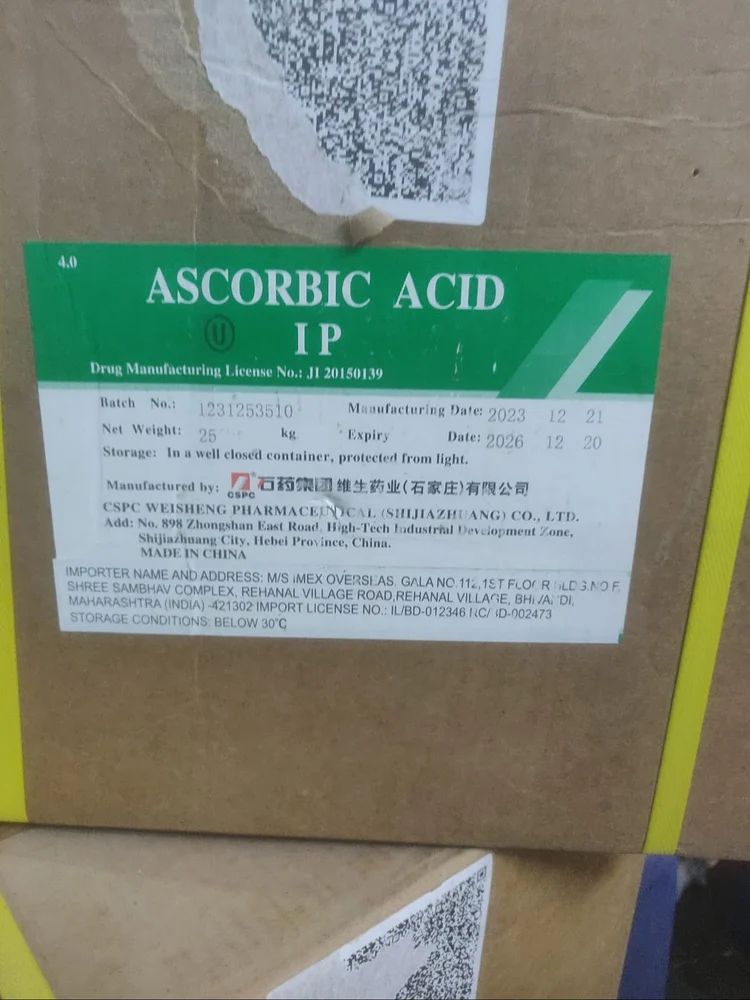
About Ascorbic Acid Vitamin C
| Grade Standard |
IP |
| Assay Purity |
99% |
| Mesh Size |
80100 Mesh |
| Form |
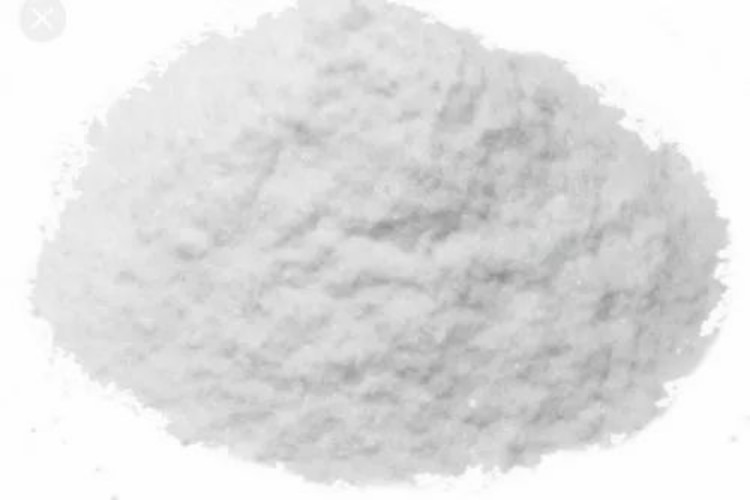
Powder |
| Purity |
Greater than 99% |
| Coating Type |
Uncoated |
| Application |
Beverage, Premix, Effervescent, Animal Feed |
| Packaging Size |
25 Kg |
| Packaging Type |
Bag |
| Shelf Life |
48 months |
| Melting Point |
190-192 deg C (374-378 deg F) (some decomposition) |
| Color |
White |
| Packing Type |
BOX |
| Formula |
C6H8O6 |
| Boiling Point |
553 deg C (1,027 deg F) |
| CAS Number |
50-81-7 |
| PubChem CID |
54670067 |
| ChemSpider |
10189562 |
| Density |
1.694 g/cm3 |
We have been counted amongst the most trusted names in this domain, engaged in offering a standard quality range of these products.
High Purity & StabilityBoasting 99% purity and stability under proper storage conditions, Ascorbic Acid retains its efficacy and integrity throughout its 24-36 month shelf life. Recommended storage involves keeping the powder in a cool, dry, ventilated space, shielded from light and moisture to preserve its physical and chemical characteristics.
Versatile Applications Across IndustriesDue to its antioxidant properties, Ascorbic Acid is widely employed in the pharmaceutical, food, cosmetic, and animal feed industries. It acts as a vitamin supplement, preservatives, and nutritional enhancer, catering to both health and functional needs in diverse formulations.
Quality & Compliance with Global StandardsAscorbic Acid meets the stringent quality benchmarks laid out by BP, USP, EP, and FCC standards. Each batch is thoroughly tested for assay, heavy metals (including lead and arsenic), and identity to assure safety and regulatory compliance. Its status as non-toxic further supports broad usage.
FAQ's of Ascorbic Acid Vitamin C:
Q: How should Ascorbic Acid Vitamin C be stored to maintain its stability?
A: To keep Ascorbic Acid stable, store it in a cool, dry, and well-ventilated area, protected from light and moisture. Adhering to these guidelines helps preserve its quality throughout its 24-36 month shelf life.
Q: What is the main benefit of using Ascorbic Acid as a food additive or supplement?
A: Ascorbic Acid serves as a potent antioxidant and vitamin supplement, supporting immune health, enhancing food preservation, and maintaining product freshness. It also assists in nutrient fortification and shelf-life extension.
Q: What are the pharmaceutical and non-pharmaceutical applications of Ascorbic Acid?
A: Pharmaceutically, Ascorbic Acid is used for vitamin supplementation and formulation of tablets or injectables. Non-pharmaceutical uses include functioning as a food preservative, nutritional fortifier in animal feed, and a skin-brightening ingredient in cosmetics.
Q: Where can Ascorbic Acid be sourced and what packaging options are available?
A: Ascorbic Acid is available through distributors, suppliers, and traders, typically packed in 25 kg drums. Custom packaging solutions can also be arranged according to specific client requirements.
Q: How is the quality and safety of Ascorbic Acid ensured?
A: Quality is verified through USP/BP tests confirming identity and purity, with heavy metal content (lead, arsenic) and loss on drying closely monitored. Compliance with global standards and low impurity levels ensure safety for various uses.
Q: What is the solubility profile of Ascorbic Acid and how does it affect its usage?
A: Ascorbic Acid dissolves easily in water, making it suitable for beverages, supplements, and injectable solutions. It is only sparingly soluble in ethanol and insoluble in ether or chloroform, so formulation compatibility should be considered accordingly.





 Send Inquiry