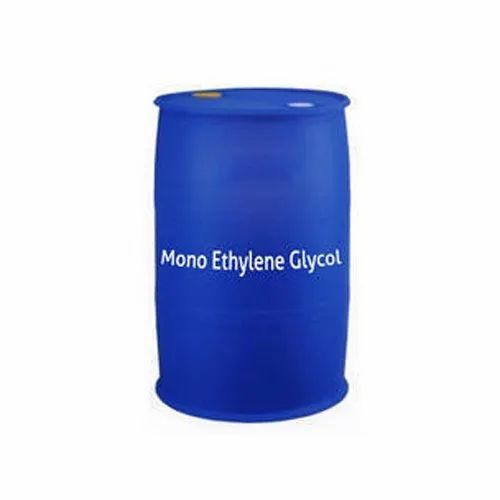
About Mono Ethylene Glycol Meg
| Purity % |
99% |
| Packaging Details |
230 kg Drum |
| Grade Standard |
Industrial Grade |
| Usage/Application |
Coolant, Raw material for antifreeze, Production of polyester fibers |
| CAS No |
107-21-1 |
| Synonyms |
Ethylene alcohol, Monoethylene glycol, C2H6O2, Hypodicarbonous acid |
| Physical State |
Liquid |
| Chemical Formula |
C2H6O2 |
| HS Code |
29053100 |
| EC No. |
203-473-3 |
| Color |
Colorless |
| Odour |
Odourless |
| Molecular Weight |
62.07 g/mol |
| Solubility in water |
Soluble |
| Vapor pressure |
0.06 mmHg (20 DegreeC) |
| Viscosity |
1.61x10 |
| Flash Point |
232 |
| Ignition Temperature |
410 DegreeC |
| Freezing Point |
-48 C |
| Molar Mass |
62.07 g/mol |
| Density |
1.11 g/cm3 |
| IUPAC ID |
Ethane-1,2-diol |
| Melting Point |
-12.9 deg C (8.8 deg F; 260.2 K) |
| Boiling Point |
197.3 deg C (387.1 deg F; 470.4 K) |
| CAS Number |
107-21-1 |
| ChemSpider |
13835235 |
| EC Number |
203-473-3 |
| PubChem CID |
174 |
Monoethylene Glycol Price List
| Packaging Details |
Price |
| 1 Kg Bag |
Rs 70 |
| 230 Kg Drum |
Rs 15920 |
Get Best price of 99% pure 230 Kg Drum of Mono Ethylene Glycol CAS No. 107-21-1, C2H6O2. For Certificate of Analysis (COA) & MSDS, kindly contact us.
Uses:
- Ethylene glycol is primarily used in antifreeze formulations (50%) and as a raw material in the manufacture of polyesters such as polyethylene terephthalate (PET)
- The major use of ethylene glycol is as a medium for convective heat transfer in, for example, automobiles and liquid-cooled computers.
- Ethylene glycol is also commonly used as a coolant for chilled-water air-conditioning systems that either place the chiller or air handlers outside or must cool below the freezing temperature of water.
Hazards:
- Very high levels of inhaled ethylene glycol vapors can irritate the upper respiratory tract.
- Levels higher than 80 ppm produce intolerable respiratory discomfort and cough.
- Ethylene glycols CNS effects can cause respiratory depression, and metabolic acidosis can result in hyperventilation and respiratory alkalosis.
- Aspiration of ethylene glycol following ingestion can result in pulmonary edema.
Essential Industrial ApplicationsMono Ethylene Glycol is indispensable in numerous applications. Its primary use is in antifreeze and coolants, offering protection against freezing and overheating in automotive and industrial engines. Additionally, MEG is a key intermediate in the production of polyester fibers, resins, deicing fluids, and other chemical processes, thanks to its excellent miscibility and chemical stability.
Safe Handling and Storage GuidelinesTo preserve MEG's quality and ensure safety, store the product in tightly sealed containers such as drums or IBC tanks, away from direct sunlight and sources of ignition. The area should be cool, dry, and well ventilated. Always use personal protective equipment when handling, and keep the product out of reach of children and pets, as it is harmful if ingested.
FAQ's of Mono Ethylene Glycol Meg:
Q: How is Mono Ethylene Glycol (MEG) typically used in industry?
A: MEG is primarily used as a raw material in antifreeze, coolants, polyester fiber production, resin manufacturing, deicing fluids, and as a chemical intermediate in various processes.
Q: What are the benefits of using Mono Ethylene Glycol as an antifreeze or coolant?
A: MEG effectively prevents engine freezing and overheating, thanks to its low freezing point and high boiling point. Its neutral pH and excellent miscibility with water enhance its performance in automotive and industrial cooling systems.
Q: How should Mono Ethylene Glycol be stored for maximum shelf life and safety?
A: Store MEG in a cool, dry, well-ventilated location, in tightly sealed drums or IBC tanks, away from sunlight and ignition sources. Proper storage ensures a shelf life of up to 24 months and maintains product purity.
Q: What safety precautions should be observed when handling MEG?
A: Always use protective equipment such as gloves and goggles. Avoid ingestion, as MEG is harmful and may cause kidney damage. Ensure adequate ventilation during use and observe all safety labeling.
Q: Which industries benefit most from using Mono Ethylene Glycol?
A: Industries involved in automotive, textiles (polyester fiber), chemicals, and manufacturing widely benefit from MEG due to its versatility, purity, and excellent solvent properties.
Q: What is the process for disposing of Mono Ethylene Glycol waste?
A: Dispose of MEG in accordance with local regulations. Do not release into drains or water bodies. Contact a certified chemical disposal company to ensure environmentally sound management.





 Send Inquiry