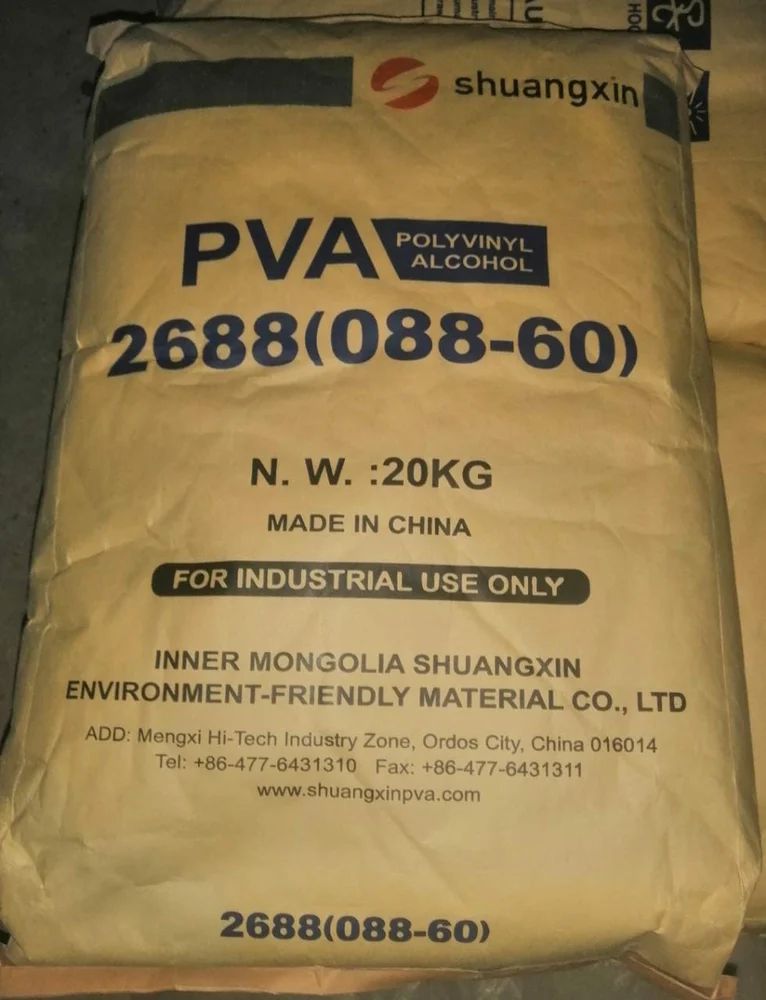
About Poly Vinyl Alcohol Pva
| Packaging Details |
25 kg Bag |
| Grade Standard |
Industrial Grade |
| Purity % |
>99% |
| Synonyms |
PVA |
| Usage/Application |
Industrial |
We have been counted amongst the most trusted names in this domain, engaged in offering a standard quality range of these products
Exceptional Versatility in Industrial ApplicationsPoly Vinyl Alcohol (PVA) stands out for its adaptability across various industries. Its excellent film formation, water solubility, and compatibility with a range of materials make it a popular choice in textiles, adhesives, paper manufacturing, and specialty chemical processes. Its grades accommodate both industrial and food-related applications.
Eco-Friendly and Safe for UsersPVA is recognized for being readily biodegradable and non-toxic. Free from notable odor or taste, it poses minimal risks in handling and end-use. With compliance to safety and quality standards such as GB/T 12010.3-2010, this synthetic resin meets the essential requirements for sustainable and safe material solutions.
Reliable Performance and Easy HandlingThis product's controlled moisture content, reliable shelf life, and stable packaging options ensure consistent performance during storage and usage. Supplied as a powder or granular solid, it is convenient to measure, dissolve, and incorporate into existing manufacturing processes.
FAQ's of Poly Vinyl Alcohol Pva:
Q: How is Poly Vinyl Alcohol (PVA) typically used in industrial processes?
A: PVA is primarily used for textile sizing, as an adhesive, for paper coatings, in emulsion polymerization, and in formulations for cosmetics and pharmaceuticals. Its film-forming ability and water solubility make it ideal for these applications.
Q: What are the recommended storage conditions for PVA to maintain its quality?
A: PVA should be stored in tightly closed containers, in a dry environment away from moisture and direct sunlight. Proper storage under these conditions helps maintain its properties and ensures a shelf life of up to 2 years.
Q: When should different viscosity grades of PVA be selected?
A: The choice of viscosity (ranging from 4-60 mPas for a 4% solution at 20C) depends on the specific application requirements, such as film thickness, adhesive strength, or solution handling characteristics. Lower viscosity grades are suited for coatings or sprays, while higher grades may enhance film strength or adhesive performance.
Q: Where can PVA offer environmental benefits?
A: PVA is readily biodegradable, so it reduces environmental impact compared to non-biodegradable polymers. This property is particularly advantageous in applications where residue may enter wastewater or composting systems.
Q: What are the safety considerations and benefits of using PVA?
A: PVA is non-toxic, non-poisonous, odorless, and tasteless, making it safe for use in a range of industries, including food and pharmaceuticals. It meets latest safety and purity standards, providing peace of mind for both users and manufacturers.
Q: How is PVA supplied and what packaging options are available?
A: PVA is typically delivered as a solid powder or granule in 25 kg bags. Jumbo bags and customized packaging options are also available upon request to meet specific volume or handling requirements.





 Send Inquiry