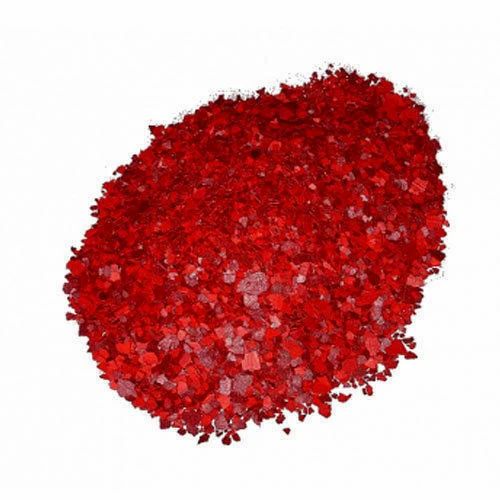
About Chromic Acid Flakes
| Grade |
Technical Grade |
| Form |
Flakes |
| Packaging Size |
50 kg drums |
| Usage |
Laboratory glassware, particularly of otherwise insoluble organic residues |
| Physical State |
Flakes |
| EC Number |
231-801-5 |
| IDLH |
15 mg Cr(VI)/m3 |
| Melting Point |
197 deg C (387 deg F; 470 K) |
| ChemSpider |
22834 |
| CAS Number |
7738-94-5 |
| PubChem CID |
24425 |
| Solubility in Water |
169 g/100 mL |
| Boiling Point |
250 deg C (482 deg F; 523 K) |
| Color |
Red |
| Formula |
H2CrO4 |
| Density |
1.201 g cm-3 |
We have been counted amongst the most trusted names in this domain, engaged in offering a standard quality range of these products.
Versatile Industrial ApplicationsChromic Acid Flakes are essential for a variety of industrial processes, including metal surface treatment, electroplating, and wood preservation. Their high purity and strong oxidizing properties make them ideal for laboratory use and as catalysts in specialized reactions. Industries trust these technically graded flakes for consistent results and efficient processing.
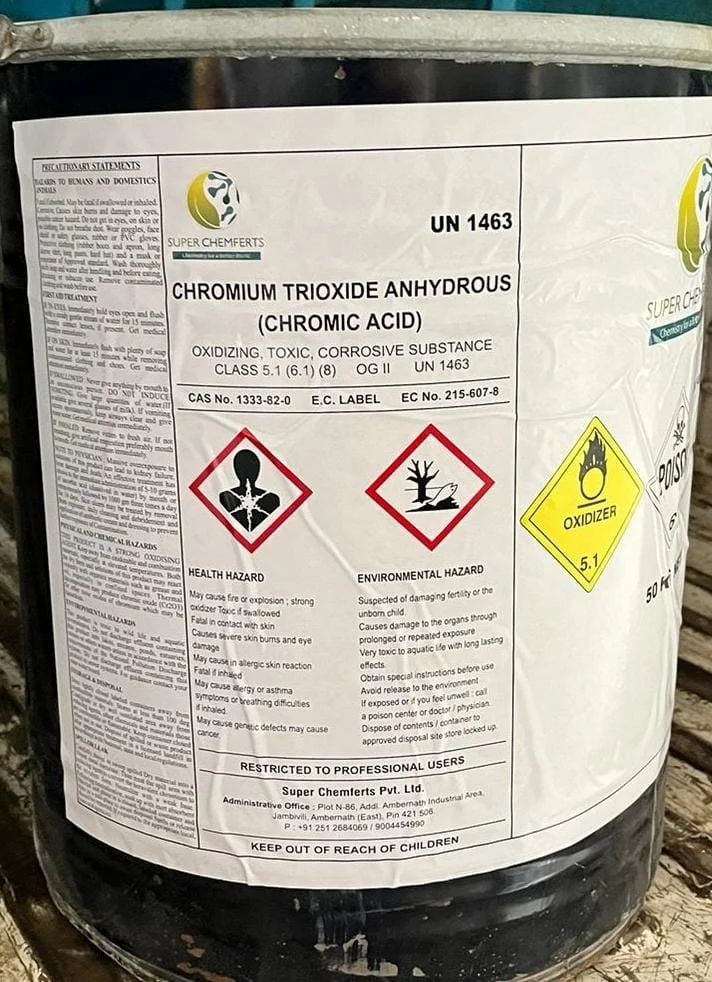
Safety and Storage ConsiderationsGiven its highly toxic and corrosive nature, Chromic Acid Flakes require meticulous handling and storage procedures. Always use protective gear when handling this substance, and store it in tightly closed containers within cool, dry, and well-ventilated spaces. Proper storage not only maintains product quality but also ensures operator safety.
Product Specifications and CustomizationWith a crystalline, dark red appearance, Chromic Acid Flakes are available in customizable sizes from 2 mm to 10 mm. Supplied with a typical purity of 99%, the product boasts a melting point of 196C and is non-flammable. Clients can select packaging options such as HDPE drums or liner bags, suited for both industrial and laboratory environments.
FAQ's of Chromic Acid Flakes:
Q: How should Chromic Acid Flakes be safely handled and stored?
A: Chromic Acid Flakes must be handled with appropriate protective equipment, such as gloves and goggles, due to their corrosive and highly toxic properties. Store the flakes in tightly sealed HDPE drums or bags, away from incompatible materials, in a cool, dry, and well-ventilated environment to maintain stability and safety.
Q: What are the primary uses of Chromic Acid Flakes in industry and laboratories?
A: These flakes are extensively used for metal finishing, electroplating, wood preservation, as laboratory reagents, and catalysts. Their strong oxidizing ability and high acidity make them valuable for these specialized industrial and scientific applications.
Q: When is Chromic Acid Flakes' reactivity considered a concern during application?
A: The flakes become highly reactive when dissolved in water, releasing heat and forming an acidic solution. This process, combined with their strong oxidizing nature, necessitates precautions to avoid contact with organic materials or reducing agents that may trigger hazardous reactions.
Q: Where can Chromic Acid Flakes be utilized for best results?
A: These flakes are best utilized in controlled industrial and laboratory settings where processes such as electroplating, wood treatment, or catalysis benefit from their high purity and oxidizing strength. Proper facility ventilation and strict safety measures are essential.
Q: What is the benefit of using Chromic Acid Flakes with 99% purity for metal finishing or plating?
A: A 99% purity level ensures high performance and consistent oxidation, resulting in superior metal finishing and plating results. This purity minimizes impurities that could compromise the quality or appearance of treated surfaces.
Q: How does the solubility of Chromic Acid Flakes impact their usage?
A: Their rapid solubility in water, accompanied by heat release, allows for the quick formation of chromic acid solutions that are immediately ready for applications in cleaning, plating, or laboratory experiments.
Q: What packaging options are available for Chromic Acid Flakes, and why are they important?
A: Packaging options include HDPE drums and bags with inner liners. These provide chemical resistance and minimize exposure to moisture or air, ensuring product integrity and safe transport.





 Send Inquiry