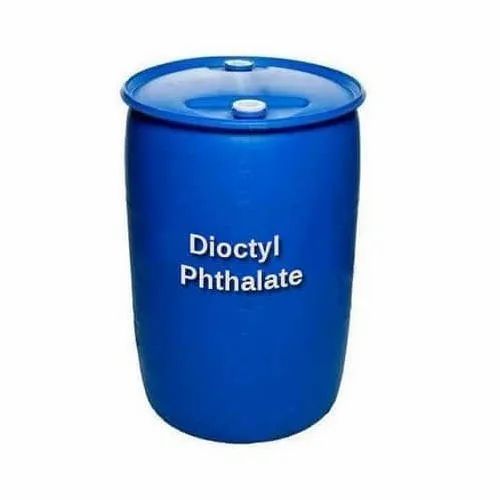
About Dioctyl Phthalate Dop
| Packing Size |
200 Litre |
| Packing Type |
Plastic Drum, Barrel |
| Form |
Liquid |
| Usage |
Plasticizers |
| Formula |
C24H38O4 |
| Molar Mass |
390.564 g.mol-1 |
| Density |
0.99 g/mL (20 deg C) |
| Melting Point |
-50 deg C (-58 deg F, 223 K) |
| Boiling Point |
385 deg C (725 deg F, 658 K) |
| CAS Number |
117-81-7 |
| ChemSpider |
21106505 |
| EC Number |
204-211-0 617-060-4 |
| PubChem CID |
8343 |
We have been counted amongst the most trusted names in this domain, engaged in offering a standard quality range of these products.
Highly Versatile PlasticizerDOP is trusted across industries for its ability to enhance flexibility, workability, and performance in PVC and other polymer-based products. From medical tubing and cables to artificial leather and films, its reliable compatibility and excellent physical properties make it an essential component in countless industrial applications.
Reliable Quality and SafetyManufactured from phthalic acid and 2-ethylhexanol, Dioctyl Phthalate stands out for its high purity (99.5% min), low acid value, and neutral pH, ensuring consistent and controlled end-product performance. When used as directed in industrial processes, it is not classified as acutely poisonous, but care must be taken to avoid misuse or prolonged exposure.
FAQ's of Dioctyl Phthalate Dop:
Q: How is Dioctyl Phthalate (DOP) typically used in industrial applications?
A: DOP is used mainly as a plasticizer to enhance softness and flexibility in PVC and other polymer products. It is commonly found in cable sheathing, films, artificial leathers, adhesives, and some medical devices.
Q: What are the recommended storage conditions for Dioctyl Phthalate?
A: DOP should be stored in tightly closed containers, placed in a cool, well-ventilated area, and kept away from heat and direct sunlight. Following these guidelines helps maintain its stability and ensures a shelf life of up to two years.
Q: Where can Dioctyl Phthalate be sourced or purchased?
A: DOP is available through chemical distributors, suppliers, and traders specializing in industrial-grade plasticizers. It is most often supplied in 200 kg steel drums or IBC tanks.
Q: What benefits does DOP provide in plasticized products?
A: DOP is prized for its high compatibility with PVC, imparting flexibility, durability, and clarity to finished products. Its consistent chemical properties support efficient processing and long-lasting end-use characteristics.
Q: When should DOP be replaced or disposed of?
A: If DOP has been stored for more than two years or exposure to heat and sunlight has occurred, its quality may degrade. It is advisable to check performance parameters before use and dispose of spent or expired material according to local regulations.
Q: Is Dioctyl Phthalate safe to handle and use?
A: DOP is not classified as acutely poisonous or non-toxic, but appropriate handling and use in industrial settings is essential. Avoid direct ingestion, prolonged skin contact, and release to the environment. Always refer to the Safety Data Sheet (SDS) and use recommended personal protective equipment.
Q: How is DOP incorporated in manufacturing processes?
A: Manufacturers add DOP directly to resins or polymers during processing, where it acts as an internal lubricant and plasticizer. It dissolves well in organic solvents but is insoluble in water, ensuring compatibility with various industrial formulations.





 Send Inquiry