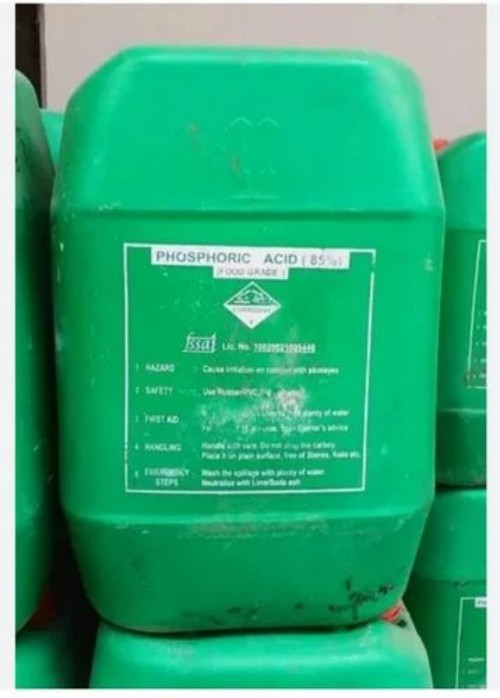
About Phosphoric Acid
| Usage/Application |
Phosphate fertilizers |
| Form |
Liquid |
| Purity |
98% |
| Packaging Size |
200 Litre |
| Packaging Type |
Barrel |
| Molecular Formula |
H3PO4 |
| Density |
1.88 g/cm3 |
| Melting Point |
42.4 deg C (108.3 deg F, 315.5 K) |
| Boiling Point |
407 deg C (765 deg F, 680 K) |
| Molar Mass |
97.994 g/mol |
| CAS ID |
7664-38-2 |
| ChemSpider |
979 |
| EC Number |
231-633-2 |
We have been counted amongst the most trusted names in this domain, engaged in offering a standard quality range of these products.
Versatile ApplicationsPhosphoric acid serves as a vital component in numerous industries. It is extensively employed in fertilizer production, water treatment, food additives, detergents, and as a chemical intermediate. Its unique acidic properties and high solubility make it suitable for industrial, agricultural, and food processing settings, ensuring process efficiency and product quality.
Safe Storage and HandlingTo ensure safety and maintain stability, phosphoric acid must be stored in tightly sealed HDPE drums, IBC tanks, or bulk tankers, in cool and dry warehouses with adequate ventilation. Given its corrosiveness to metals and tissue, users should always wear personal protective equipment and avoid direct contact with skin or inhalation of vapors during handling.
Regulatory Compliance and QualityOur phosphoric acid meets international quality standards, delivered with a purity of at least 85% for industrial grade. With UN1805 classification and Hazard Class 8 labeling, it complies with global shipping and handling regulations. All packaging types are designed to uphold quality and extend shelf life up to two years.
FAQ's of Phosphoric Acid:
Q: How should phosphoric acid be stored to maintain its stability?
A: Phosphoric acid should be stored in tightly sealed containers such as HDPE drums or IBC tanks in a cool, dry, and ventilated area. This keeps the acid stable and prevents moisture ingress, ensuring its effective shelf life of up to two years in original packaging.
Q: What are the main uses and benefits of phosphoric acid in industry?
A: Phosphoric acid is primarily used in the manufacture of fertilizers, detergents, food additives, water treatment chemicals, and as a processing aid in various industries. Its benefits include acting as a pH adjuster, corrosion inhibitor, cleansing agent, and nutrient source for plants.
Q: When should personal protective equipment be used while handling phosphoric acid?
A: Personal protective equipment, including gloves, goggles, and protective clothing, should be worn at all times during handling to prevent skin or eye contact, and to avoid inhalation of fumes, as the acid is corrosive and harmful upon direct contact.
Q: Where is phosphoric acid commonly utilized outside of manufacturing?
A: Beyond manufacturing, phosphoric acid finds application in agricultural settings as a fertilizer component, in water treatment plants to control pH and prevent pipe corrosion, and in the food industry for acidity regulation in processed foods and beverages.
Q: What process is followed for distributing phosphoric acid safely?
A: Phosphoric acid is distributed in durable HDPE drums, IBC tanks, or bulk tankers, with all containers being clearly labeled with UN1805 marking and hazard class 8 warnings. Transportation adheres to international hazardous goods regulations to ensure safe handling and delivery.
Q: Is phosphoric acid harmful, and what precautions should be taken?
A: Yes, phosphoric acid is corrosive and harmful if ingested, inhaled, or in contact with skin and eyes. It should not be considered non-toxic. Always handle with proper protective equipment, avoid spills, and consult the safety data sheet for first aid measures in case of exposure.





 Send Inquiry