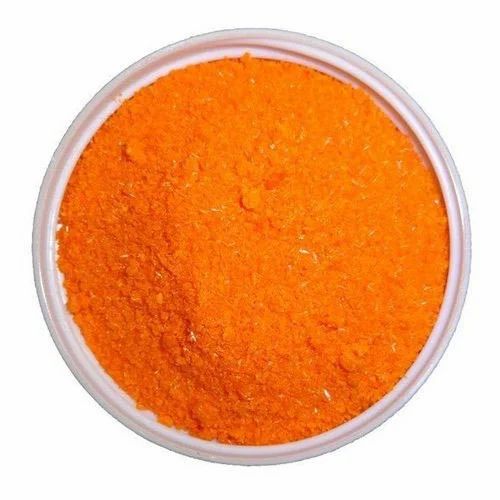
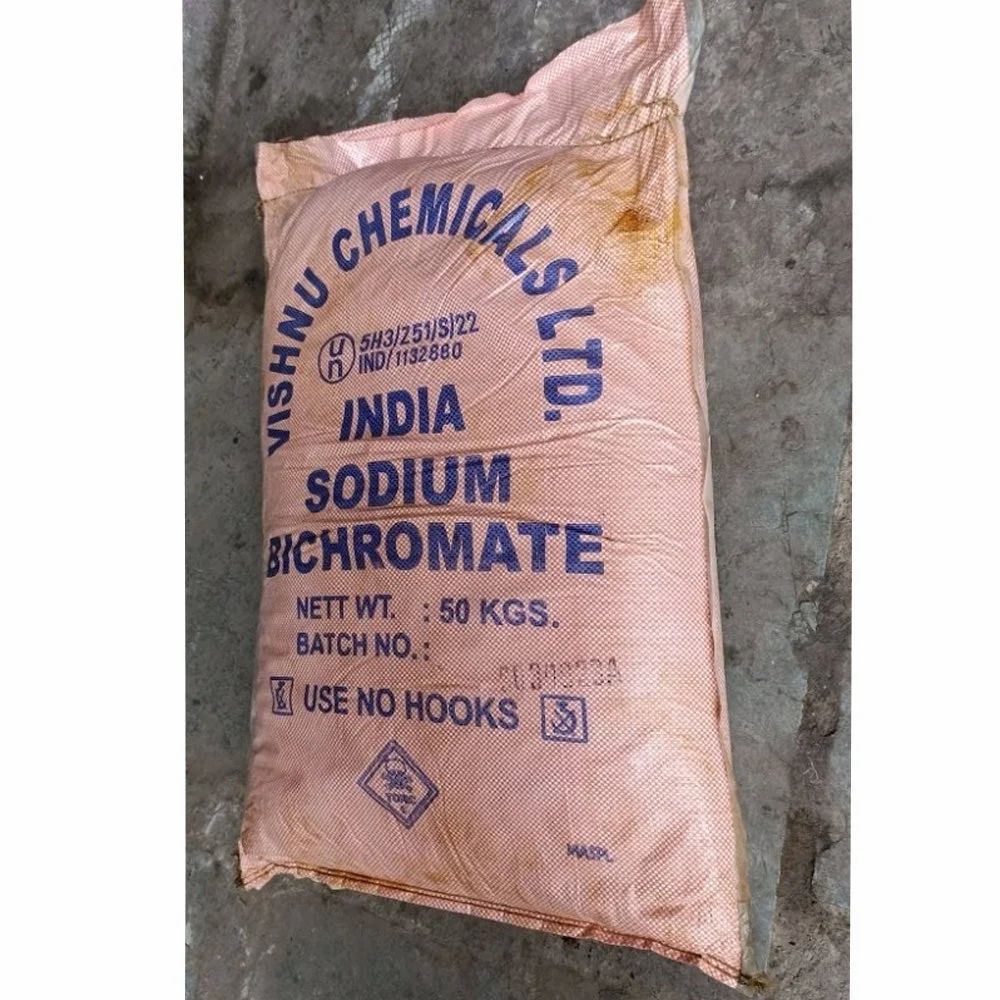
About Sodium Dichromate Powder
| Grade Standard |
Technical Grade |
| Physical State |
Powder |
| Packaging Size |
50 kg |
| Density |
2.52 g/cm3 |
| Formula |
Na2Cr2O7 |
| Solubility |
Readily soluble in Water |
| Molar Mass |
261.97 g/mol |
| UN number |
3288 |
| CAS Number |
10588-01-9 |
| ChemSpider |
23723 |
| EC Number |
234-190-3 |
| PubChem CID |
25408 |
| Melting Point |
356.7 deg C (674.1 deg F; 629.8 K) |
| Boiling Point |
400 deg C (752 deg F; 673 K) decomposes |
| Color |
Orange |
We have been counted amongst the most trusted names in this domain, engaged in offering a standard quality range of these products.
Versatility in ApplicationThis chemical is chosen for its effectiveness in diverse industrial processes. Its strong oxidizing properties make it essential in sectors like leather tanning, textile dyeing, wood treatment, and pigment manufacture. Laboratories also employ it for specialized chemical synthesis and analysis.
Safe Storage and Long Shelf LifeSodium Dichromate maintains stability for up to two years when kept in unopened, tightly sealed containers under cool, dry conditions. Appropriate storage is crucial to prevent contamination with organic materials or moisture, ensuring safety and consistent quality.
Handling PrecautionsDue to its toxicity and oxidizing nature, adherence to recommended handling guidelines is non-negotiable. Protective clothing, gloves, and eyewear must be worn to prevent skin or eye contact and inhalation. Spillages require prompt attention to avoid environmental contamination.
FAQ's of Sodium Dichromate Powder:
Q: How should Sodium Dichromate Powder be safely stored and handled?
A: Sodium Dichromate should be stored in tightly sealed HDPE bags with an inner liner, kept in a cool, dry area away from combustibles and organic materials. Always use personal protective equipment to avoid direct contact with skin, eyes, or inhalation of dust.
Q: What are the primary industrial uses of Sodium Dichromate Powder?
A: It serves as an oxidizing agent in industries including leather tanning, textile dyeing, wood preservation, metal treatment, and the production of pigments and other chromium compounds. It is also utilized for specialized laboratory applications.
Q: When does Sodium Dichromate pose the greatest hazard?
A: Risks increase during improper handling, storage near incompatible substances, or spillage, as it is both toxic (Class 6.1) and an oxidizer (5.1). It is particularly hazardous if inhaled, ingested, or if it contaminates water sources, harming aquatic life.
Q: Where should Sodium Dichromate Powder not be stored?
A: It must not be stored near organic materials, combustible substances, or in damp, unventilated areas, as these increase the risk of dangerous reactions or product degradation.
Q: What is the process for disposing of Sodium Dichromate Powder?
A: Disposal must comply with local environmental regulations, often requiring the involvement of licensed waste management agencies. It should never be released into the environment or water systems due to its high toxicity.
Q: Can Sodium Dichromate be tasted or smelled to check purity or presence?
A: No, never taste or smell Sodium Dichromate. It is toxic and should be handled with appropriate care, using precise laboratory methods for any required quality checks.
Q: What is the benefit of using Sodium Dichromate in industrial applications?
A: Its strong oxidizing capability enables efficient chemical reactions, contributing to effective processing in leather, textiles, wood, and pigment manufacturing, making it invaluable in technical and industrial operations.





 Send Inquiry