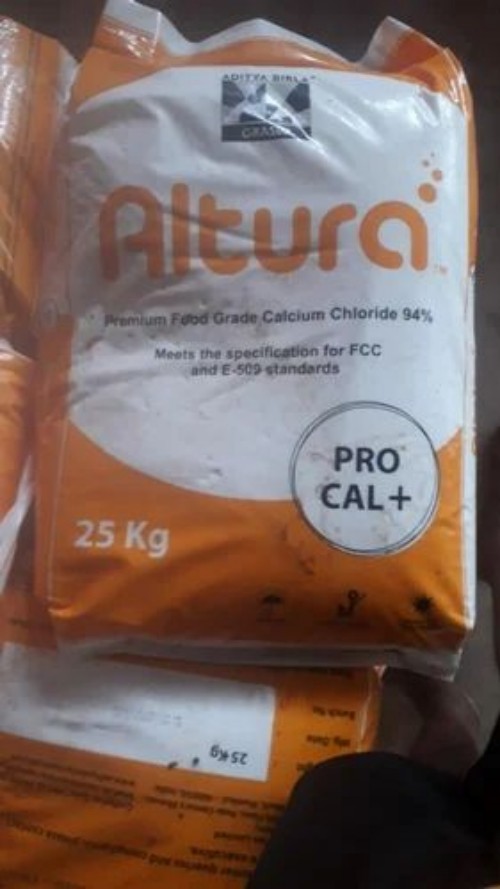
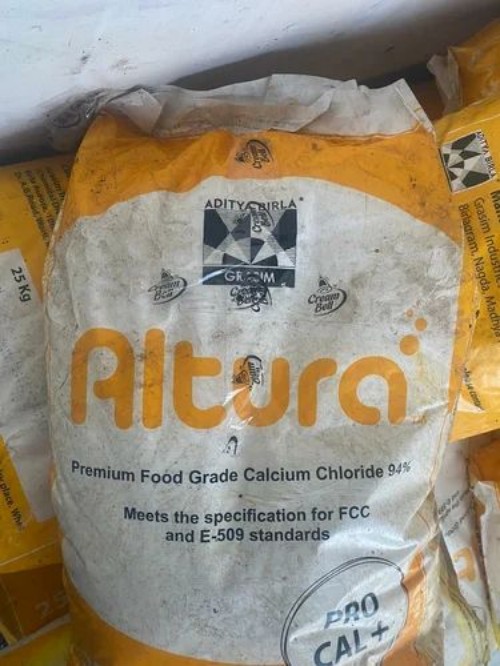
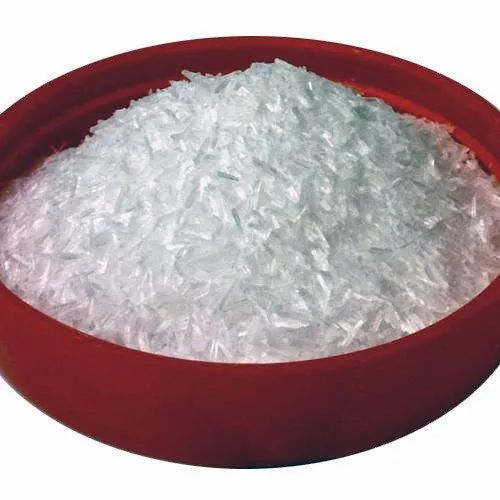
About Calcium Chloride Prills
| Grade Standard |
Chemical Grade |
| Packaging Size |
25 Kg |
| Form |
Granules |
| Purity |
70-80% |
| Chemical Formula |
CaCl2 |
| Cas Number |
10043-52-4 |
| Density |
2.15 g/cm3 |
| Melting Point |
772-775 deg C (1,422-1,427 deg F; 1,045-1,048 K) |
| Boiling Point |
1,935 deg C (3,515 deg F; 2,208 K) |
| Packaging Type |
PP Bag |
| Molar Mass |
110.98 g/mol |
| Soluble in |
Water, Acetic Acid, Acetone |
We have been counted amongst the most trusted names in this domain, engaged in offering a standard quality range of these products.
Highly Effective Moisture AbsorptionCalcium Chloride Prills are prized for their remarkable hygroscopic properties, efficiently drawing moisture from the air. This makes them a preferred choice for industrial processing, packaging, and storage applications where controlling humidity is essential. Their rapid dissolution in water further enhances their performance as desiccants in both large-scale and specialized operations.
Versatile Applications Across IndustriesThese prills serve in a broad range of industries, from construction as concrete accelerators to roadway maintenance for de-icing and dust suppression. In the food industry, suitable grades act as additives. Their excellent compatibility (aside from strong acids) and high purity enable reliable, efficient use in demanding environments, including refrigeration systems and moisture control scenarios.
Safe and Simple Handling and StorageCalcium Chloride Prills are non-poisonous and not classified as hazardous when used under normal conditions. For optimal shelf life, they should be stored in cool, dry locations in tightly sealed containers to prevent moisture absorption. These best practices ensure the product maintains its integrity and performance throughout its 24-month shelf life.
FAQ's of Calcium Chloride Prills:
Q: How should Calcium Chloride Prills be stored to maintain their effectiveness?
A: To ensure Calcium Chloride Prills remain effective, store them in tightly sealed containers in a cool, dry place. This prevents them from absorbing moisture from the air, which could reduce their performance as they are highly hygroscopic.
Q: What are the primary uses and benefits of Calcium Chloride Prills?
A: Calcium Chloride Prills are primarily used for de-icing, dust control, moisture absorption as desiccants, accelerating concrete curing, refrigeration brines, and as food additives (for appropriate grades). Their high efficiency, rapid solubility, and versatility make them beneficial across many industries.
Q: When should Calcium Chloride Prills be applied for moisture absorption or de-icing?
A: Calcium Chloride Prills should be applied when there is a need to control humidity (as a desiccant) or to melt ice during winter conditions. Their rapid action and strong moisture absorption make them ideal for immediate operational requirements.
Q: Where can Calcium Chloride Prills be used safely and effectively?
A: These prills can be used in industrial plants, on roadways for de-icing, at construction sites (for accelerating concrete), in food processing (for food-grade material), cold storage, and packaging areas where moisture and dust control are crucial.
Q: What is the process for using Calcium Chloride Prills as a concrete accelerator?
A: To use Calcium Chloride Prills as a concrete accelerator, dissolve them in water to the recommended concentration and add the solution to the mix. They enhance the setting and strength development of concrete, especially in colder climates.
Q: How compatible are Calcium Chloride Prills with other materials?
A: Calcium Chloride Prills are compatible with most materials, except strong acids. They should not be mixed or stored in contact with acidic substances to avoid chemical reactions or product degradation.
Q: What safety measures should be taken when handling Calcium Chloride Prills?
A: While non-toxic and not hazardous under normal conditions, it is advisable to wear gloves and eye protection to avoid irritation. Handle with care to prevent spills and always reseal packaging after use to maintain product quality.





 Send Inquiry