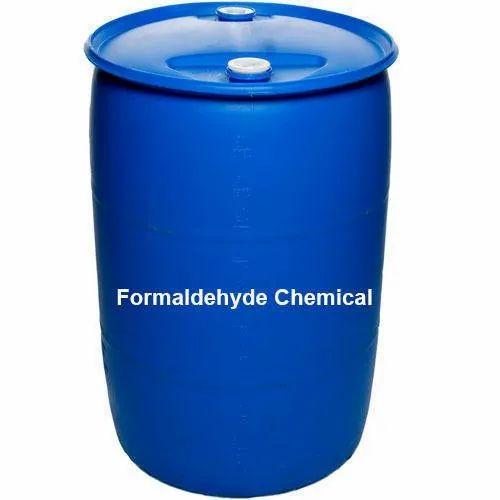
About Liquid Formaldehyde Chemical
| Formaldehyde Content |
37% |
| Form |
Liquid |
| Grade |
Industrial |
| Application |
Disinfectant |
| Packaging Size |
200 Litre |
| Stabilizer |
Methanol |
| Purity |
37% |
| Packaging Type |
Barrel |
| IUPAC- Name |
Methanal |
| Cas Number |
50-00-0 |
| Molecular Formula |
CH2O |
| E.C. Number |
200-001-8 |
| Physical Properties |
Liquid |
| Density |
815 kg/m3 |
| Melting Point |
-92 deg C (-134 deg F; 181 K) |
| Boiling Point |
-19 deg C (-2 deg F; 254 K)[2] |
| ChemSpider |
692 |
| Molar Mass |
30.031 g/mol |
| PubChem CID |
712 |
We have been counted amongst the most trusted names in this domain, engaged in offering a standard quality range of these products.
Key Properties and CompositionFormaldehyde solution, also known as formalin, consists of 37% formaldehyde in water. With a density of 1.09 g/cm3 and a pH ranging between 2.8 and 4.0, it displays a pungent smell and is classified as a potent disinfectant and preservative. Its stable nature and readiness for biodegradability ensure effective industrial use.
Safe Handling and StorageFor safety, transfer and store Liquid Formaldehyde in HDPE barrels, tanks, or glass containers. Keep containers tightly closed in a cool, well-ventilated place. Adhering to these storage guidelines extends the product's shelf life up to a year and helps prevent hazardous exposure.
Regulatory Compliance and ApplicationsMeeting REACH, OSHA, and other relevant industry guidelines, this substance is widely used for laboratory, industrial, and manufacturing purposes. It acts as an effective disinfectant, preservative, and intermediate in resin, paper, and textile production, demonstrating versatile utility without compromising compliance.
FAQ's of Liquid Formaldehyde Chemical:
Q: How should Liquid Formaldehyde be safely stored and handled?
A: Liquid Formaldehyde should be stored in tightly sealed HDPE barrels, tanks, or glass containers in a cool, well-ventilated area. Proper personal protective equipment is required during handling to prevent skin and eye contact, as the chemical is toxic and can cause irritation.
Q: What are the primary industrial uses of Liquid Formaldehyde?
A: This chemical is commonly used as a preservative, disinfectant, and intermediate in manufacturing resins, textiles, and paper. Its efficacy in preventing microbial growth and facilitating chemical synthesis makes it valuable in numerous industrial sectors.
Q: When does Liquid Formaldehyde expire, and how can its shelf life be maximized?
A: Under recommended conditions, the shelf life of Liquid Formaldehyde is one year. To maximize longevity, ensure it is stored in a cool, well-ventilated environment within tightly closed containers and away from direct sunlight or heat sources.
Q: Where can Liquid Formaldehyde be applied in laboratory settings?
A: In laboratories, it is utilized for specimen preservation, tissue fixation, and as a disinfectant. Its ability to stabilize biological materials makes it a standard reagent for research and diagnostic procedures.
Q: What safety measures must be taken during Liquid Formaldehyde usage?
A: Always use protective gloves, eyewear, and clothing, and operate in ventilated spaces. Since it is toxic, avoid inhalation or direct contact, and ensure proper spill control measures are in place to address accidental exposure.
Q: How does Liquid Formaldehyde benefit industrial processes?
A: Its potent antimicrobial properties help extend product shelf lives and maintain sterility, while its reactive nature supports the efficient synthesis of resins and other critical compounds, enabling streamlined industrial production.
Q: Is Liquid Formaldehyde environmentally safe and compliant with regulations?
A: While toxic to humans, Liquid Formaldehyde is readily biodegradable in the environment. It is manufactured and distributed in compliance with REACH, OSHA, and other industrial standards, signifying responsible regulation and safety adherence.





 Send Inquiry