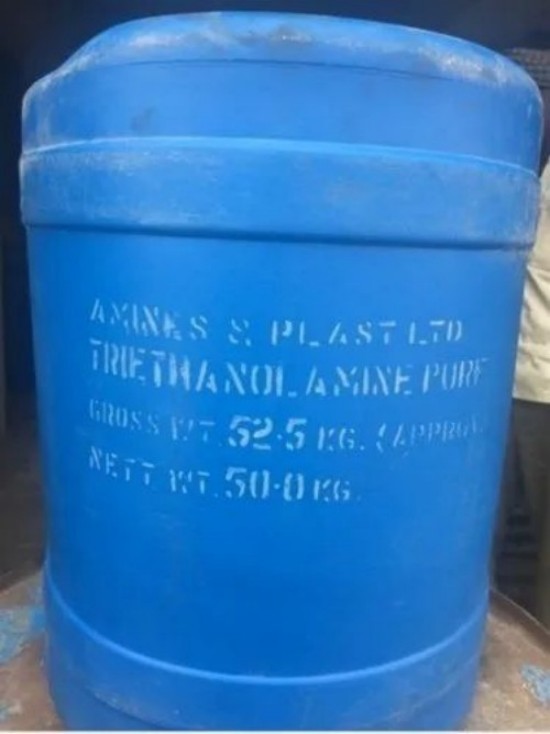
About Triethanolamine Industrial Chemical
| Purity |
99.9% |
| Usage/Application |
Buffering agent, masking and fragrance ingredient etc. |
| Packaging Type |
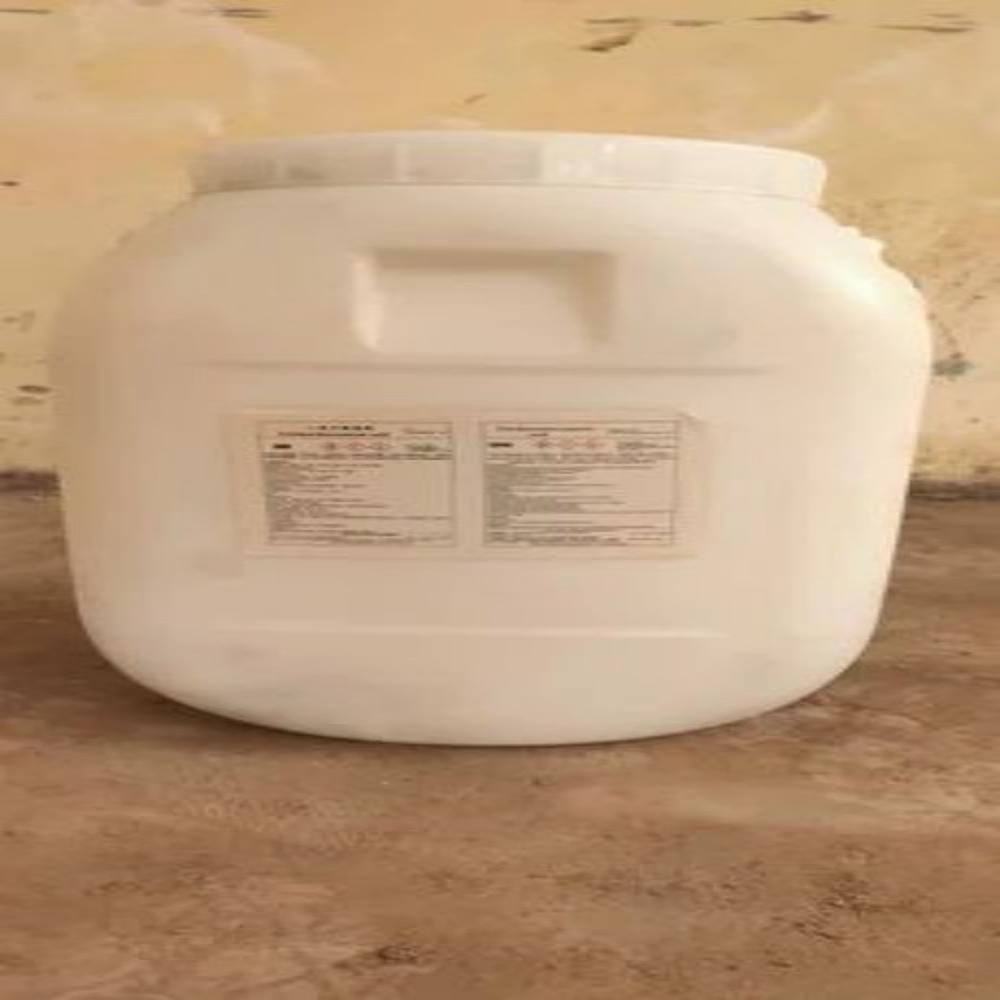
Barrel, Drum |
| Chemical Formula |
C6H15NO3 |
| Molecular Weight |
149.188 g/mol |
| Density |
1.13 g/cm3 |
| Melting Point |
21.60 deg C; 70.88 deg F; 294.75 K |
| Boiling Point |
335.40 deg C; 635.72 deg F; 608.55 K |
| PH Value |
85% |
| Physical Form |
Liquid |
| CAS Number |
102-71-6 |
| Acidity |
7.74 (pKa) |
| ChemSpider |
13835630 |
| PubChem CID |
7618 |
We have been counted amongst the most trusted names in this domain, engaged in offering a standard quality range of these products.
Versatility Across IndustriesTriethanolamine's ability to act as a surfactant, emulsifier, and pH balancer makes it a valuable ingredient in many industries, from cosmetics to the manufacture of detergents and textiles. Its compatibility with both anionic and nonionic surfactants allows flexibility in formulation, making it suitable for a wide variety of processes and products.
Safe Handling and StorageThis chemical is stable under recommended conditions and should be stored in tightly closed containers in cool, dry, ventilated areas. Despite being non-toxic and not classified as poisonous, it's important to follow standard industrial hygiene practices. Its packaging options make it easy for distributors and manufacturers to handle large quantities efficiently.
FAQ's of Triethanolamine Industrial Chemical:
Q: How is Triethanolamine typically used in industry?
A: Triethanolamine is commonly used as a surfactant, emulsifier, and pH balancer in industries such as cosmetics, textiles, lubricants, cement, detergents, and agricultural products. Its ability to modify pH and enhance formulation stability is particularly valued.
Q: What are the benefits of using Triethanolamine in formulations?
A: Using Triethanolamine can improve emulsion stability, enhance surfactant performance, balance pH in formulations, and aid in the solubilization of other ingredients, resulting in better product effectiveness and stability.
Q: What is the proper process for storing Triethanolamine?
A: Store Triethanolamine in tightly sealed containers, such as HDPE drums or IBC tanks, in a cool, dry, and well-ventilated area to ensure product stability and to maintain its quality over its two-year shelf life.
Q: When does Triethanolamine expire?
A: Triethanolamine has a shelf life of two years when stored properly in recommended conditions, ensuring it remains effective and stable throughout this period.
Q: Where can Triethanolamine be sourced and how is it packaged?
A: Triethanolamine can be sourced from authorized industrial chemical suppliers, distributors, or traders. It is typically supplied in 230 kg HDPE drums, IBC tanks, or in bulk quantities for convenience in large-scale applications.
Q: How does Triethanolamine interact with other formulation ingredients?
A: It is compatible with both anionic and nonionic surfactants, and is miscible with water, alcohol, and glycerol, facilitating easy integration into diverse industrial formulations and processes.
Q: Is Triethanolamine safe and compliant with regulations?
A: Yes, Triethanolamine is not classified as poisonous or toxic and complies with key regulations, including REACH and RoHS. Standard industrial safety measures should still be followed when handling it.





 Send Inquiry