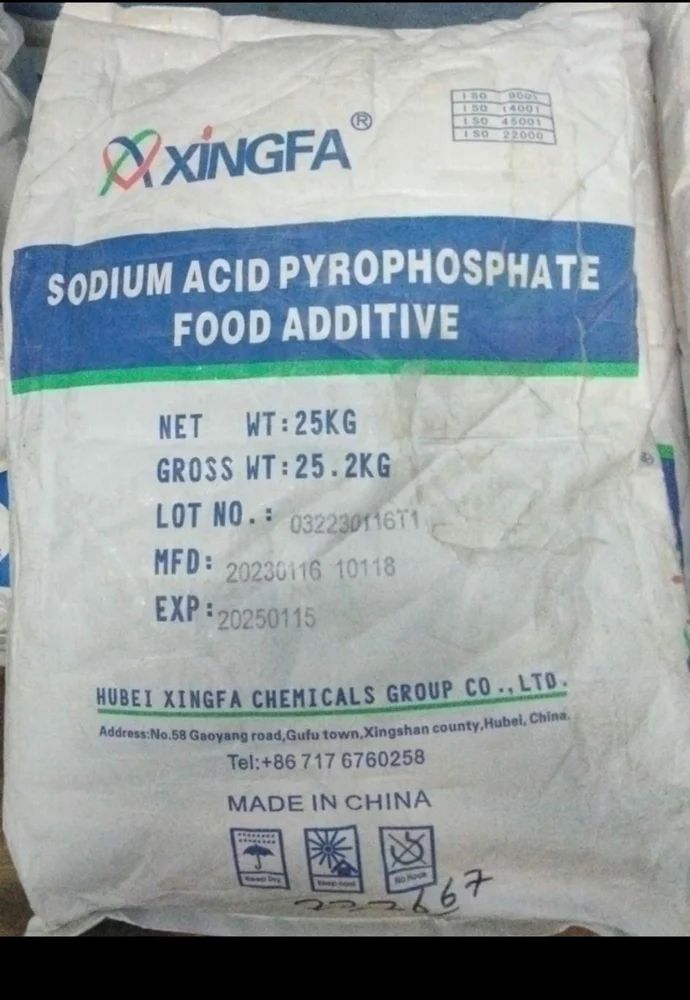
About Sodium Acid Pyro Phosphate
| Packaging Size |
25 kg |
| Usage/Application |
Bakery |
| Packaging Type |
Bag |
| Also known as |
FOOD ADDITIVES |
| Shelf Life |
3 YEARS |
| Grade Standard |
FOOD GRADE |
It is food grade anhydrous citric acid used in various industries. We have been counted amongst the most trusted names in this domain, engaged in offering a standard quality range of these products.
Features and Purity StandardsSodium Acid Pyrophosphate (CAS No: 7758-16-9) is recognized for its high purity (>98%) and consistent physical properties, including a bulk density of 0.8-1.0 g/ml and virtually no toxic heavy metal contamination. It meets food and industrial grade requirements, making it suitable for critical applications in various industries.
Versatile Uses Across IndustriesSAPP acts as a leavening agent in baking powder, a stabilizer in processed foods, and is valuable in water treatment. It also finds application in leather and petroleum industries. Its distinctive properties ensure safe, efficient performance wherever consistency and reliability are required.
Safe Handling and Storage RecommendationsTo extend shelf life and maintain quality, Sodium Acid Pyrophosphate should be stored in a cool, dry, and well-ventilated place, sealed securely against moisture. Proper storage ensures stability for up to 24 months, with packaging options adaptable to customer requirements.
FAQ's of Sodium Acid Pyro Phosphate:
Q: How is Sodium Acid Pyrophosphate typically used in food processing?
A: Sodium Acid Pyrophosphate functions primarily as a leavening agent in baking products like cakes and breads. It also acts as a sequestrant and buffer, helping to stabilize processed foods and maintain product quality.
Q: What are the main benefits of using SAPP in industrial applications?
A: SAPP's ability to chelate metal ions and adjust pH makes it valuable in water treatment, leather processing, and petroleum production. Its consistent physical form and high purity ensure reliable performance in these industries.
Q: Where should Sodium Acid Pyrophosphate be stored for optimal shelf life?
A: It should be kept in a cool, dry, and well-ventilated area, away from moisture and contaminants. Following these guidelines helps maintain its 24-month shelf life and preserves product quality.
Q: When should SAPP be added during baking processes?
A: SAPP is typically mixed with other baking ingredients to ensure it acts as a controlled-release leavening agent, producing carbon dioxide at the desired stage for proper dough rising.
Q: What safety precautions are required when handling Sodium Acid Pyrophosphate?
A: While SAPP is non-toxic at permitted levels, it's advisable to avoid direct inhalation or contact with eyes and skin. Always follow safety protocols, including the use of gloves and masks during handling, especially in industrial settings.
Q: How is SAPP packaged for distribution, and can packaging be customized?
A: The standard packaging for SAPP is 25 kg bags, but it can also be provided in alternative packaging formats based on customer requirements to ensure safe handling and convenience during transport and storage.
Q: What sets Sodium Acid Pyrophosphate apart from other leavening agents?
A: SAPP offers a controllable reaction rate and high purity, making it ideal for processed foods where consistency and safety are paramount. Its multifunctional role as a sequestrant and buffer further enhances its versatility.





 Send Inquiry